
While regular nutritious meals promote the maintenance of a healthy weight and stabilize blood glucose levels, grazing on food at random throughout the day has the opposite effect. The reason for this is twofold.
Firstly, unplanned, unprepared meal times puts you at the risk of grabbing foods that lack nutrients while spiking both your blood glucose level and your total daily energy intake. For those suffering with insulin resistance, diabetes or obesity … this is a scenario to be avoided.
Without a set meal routine, snacking can become both mindless and unnecessary. Eating in excess of what you need is easy if you do not consciously account for all the food you eat in a day … either by planning ahead or being mindfully present at each meal. Being accountable for what you eat results in an automatic daily energy intake regulation. This is the very simple reason why fad diets work, initially at least. Increased accountability and awareness of food intake generates the true success of any weight loss diet.
Your meals should provide essential nutrients in addition to energy and should be spread out with 2.5 to 3 hours in between, during which no food or beverages, especially those containing carbohydrate should be consumed. This reduces the potential to overeat, which results in weight gain and ultimately the increased risk of developing diabetes and heart disease.
Secondly, every time we eat, we make a demand on the pancreas to produce insulin… a hormone essential for the uptake of glucose from the blood stream into the body cells where it is require for use or storage. This insulin is also involved in the body’s use and storage of fat. High levels of insulin circulating in the blood stream promote excessive fat storage leading to weight again, especially in the abdominal area. Consistently placing a high demand on the pancreas to produce excessive amounts of insulin can lead to the development of diabetes. Studies have revealed that a daily intake of even just one beverage containing carbohydrates puts both overweight people and people of a normal weight at an increased risk of developing diabetes.
The key to facilitating optimal blood glucose clearance between meals also lies in the eating of smaller meals, free from refined carbohydrate 4 to 5 times a day. Smaller meals can be managed with a smaller amount of insulin. This is especially significant in the case of insulin resistance and diabetes. The demand on the pancreas is reduced and the level of glucose in the blood stream stays with in a desirable range.
The ultimate goal therefore is to prevent overeating and over-stimulating the pancreas, each of which cause weight gain and the increased risk for disease.
Tips for success
1. Think of each of these regular ‘eating occasions’ as a meal rather than a snack. A meal has multiple ingredients thereby offering balanced nutrition. Include a minimum of two ingredients per meal. For example, rather than eating four plain crackers to fill the gap, eat two smeared with hummus, peanut butter or cottage cheese. Changing the nutrient profile of your meals is as important as improving your portion control.
2. Plan your meals ahead as far as possible and carry food prepared at home to work, university or school. If you do not know where your next meal is coming from, food will become a surprising focus until you source the meal in question. The psychological effect of a well-chosen lunch box can provide is worth the effort that goes into it.
3. Treats are any foods that lack fibre or contain high quantities of sugar, salt, saturated fats or trans fats (fried foods). There is no harm in enjoying the occasional treat food but it is best enjoyed with a meal as a little dessert so that the effect of the food on your blood glucose level is minimized.
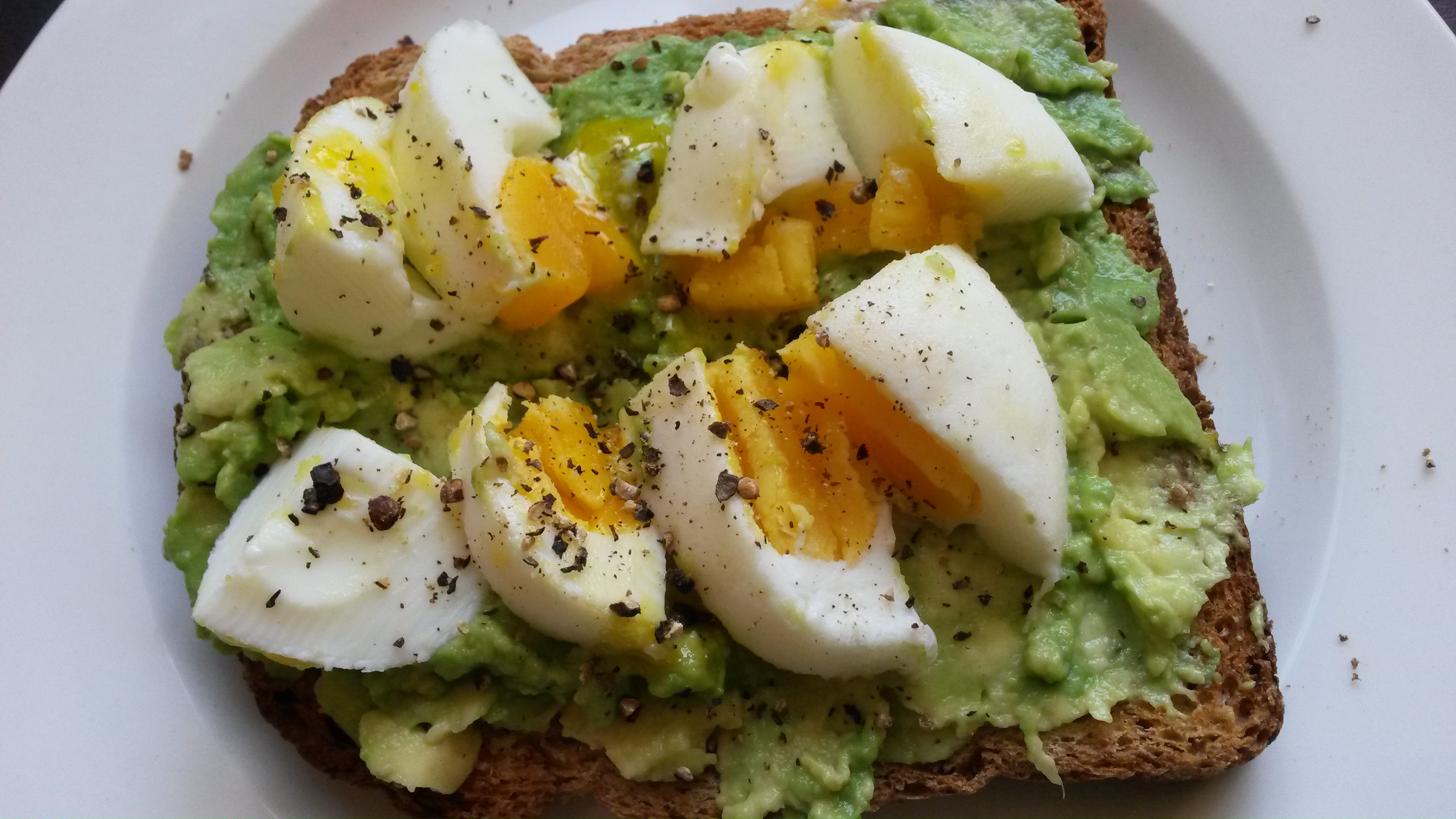
4. My new favourite ingredient combo is poached egg with avocado and freshly ground pepper – delicious with whole grain breads or crackers and rice cakes.
